Friday, February 24, 2012

Doom of Odin


"I find no comfort in the shade
Under the branch of the Great Ash.
I remember the mist
of our ancient past.
As I speak to you in the present,
My ancient eyes
see the terrible future.

"Do you not see what I see?
Do you not hear
death approaching?

"The mournful cry of Giallr-horn
shall shatter the peace
And shake the foundation of heaven.

"Raise up your banner
And gather your noble company
from your great hall,
Father of the Slains.
For you shall go to your destiny.

"No knowledge can save you,
And no magic will save you.
For you will end up in Fenrir's belly,
While heaven and earth will burn
in Surt's unholy fire."

— Doom of Odin,
from the Book of Heroes

Monday, February 20, 2012

Sign of the Water Lily

"My roots touch unseen knowledge."


If you were born between February 20 and March 20, you were born under the sign of the Water Lily. Water lily flower signs are perceptive and deeply psychic. Water runs through all the flower signs but especially through yours and this accentuates your intuitive abilities. You are sometimes able to absorb ideas and thoughts of those around you. You can be emotionally swayed by other people's feelings too. Sometimes your emotions can run out of control, but you can turn to your natural creative abilities to help you get grounded. You are a natural artist, dancer, and musician. You are also an excellent communicator, and may be drawn to other languages too.

Source: What's Your Sign

Sunday, February 19, 2012

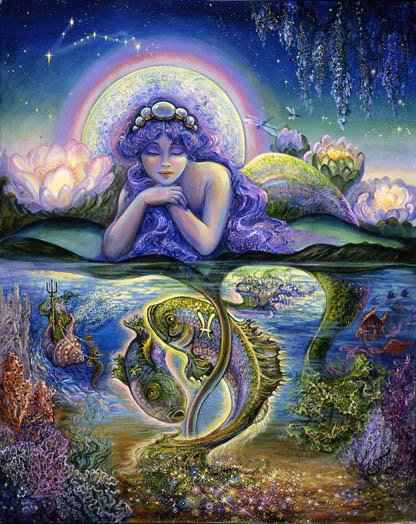
Sun in Pisces


The Sun is in Pisces from February 19 to March 20, depending on the year.

Symbol: The Fish
Ruler: Neptune
Element: Water
Season: Winter
Modality: Mutable
Placement in Zodiac: 12th Sign
Metal: Tin
Stone: Jade. Coral
Color: Sea Green
Flowers: Jonquil; Violet; Poppy
Anatomy: Feet, Veins

Keywords: intuitive, dreamy, artistic, humane, sympathetic, sensitive, compassionate, perceptive, tender, impressionable

As the twelfth and last sign of the zodiac, Pisces contains within itself a little experience of all the signs. This gives Pisces Suns the ability to identify with people from all walks of life—from all backgrounds—in some way. These individuals are not only changeable and adaptable, they have open minds and tremendous understanding. But Pisces itself is often misunderstood. Pisces Suns may spend a good portion of their lives yearning for understanding, and the other part in a state of divine discontent. Suffering is sometimes glamorized in the Piscean world.

Sun in Pisces people are frequently pegged as wishy-washy, but this is all a matter of opinion. What you will find behind a vaguely directionless, spacey manner is a deep person with real dreams. Their dreams are more than getting that picket fence or making it up the corporate ladder. Pisces are tuned in to a higher purpose and their dreams transcend the individual. A deep love for humanity, and compassion that knows no bounds is found with this placement of the Sun.

Pisceans are not known to be cutthroat business types, nor are they given to throwing themselves out into the world in an aggressive manner. But make no mistake about it, Pisces can be extraordinarily successful when given the chance to express themselves. The arts, marketing, music, teaching, drama, healing arts...these are all fields in which Pisces can find expression. Their imagination, attunement to humanity, and remarkable intuition endow them with enviable gifts of insight and creativity.

Pisces is a sensitive sign—both sensitive to criticism and sensitive to others' feelings. Easily touched by human suffering, at least in theory, Pisces wouldn't hurt a fly. They believe in people, are deeply hurt by compassionless human behavior, and have a hard time saying no. Harsh realities are avoided either through escapist behavior or self-delusion; but every now and again reality does raise its ugly head, and hits Pisces over the head. This is a sad time indeed. Pisces retreats into their own world, self-pitying and giving pep talks to themselves ("I will never trust again!"). Rest assured, though, that these periods are rather short-lived and even useful. Pisces seems to derive energy from their (generally short) bouts of self-pity. They come back stronger, with a spring in their step, ready to face the world again, and just as, if not more, compassionate and trusting as they were before. Some might even wonder if Pisces finds pleasure in suffering. Sometimes this is the case, but most of the time, Pisces pulls a lot of creative energy from sadness. Pisces is the poet or artist with angst, although this trait is often more apparent with Moon in Pisces.

Some find Pisces' tendency to be late for appointments, spaced out behavior, and absent-mindedness amount to irresponsibility. Pisces would be shocked to know this, however. Who me? Pisces wonders. Irresponsible? Pisces Suns absolutely care—their love knows no bounds—but their retreats from ordinary life (whether they are as simple as daydreams or actual departures) that they so seem to need every now and again are not always understandable to no-nonsense signs, such as Virgo or Aries.

Many Pisces seem almost allergic to things like shopping lists, maps, directions, and instructions, and for some brave souls, even watches — they prefer to feel their way through life than to follow some plan.

We find plenty of artists, poets, and musicians with Sun (and other personal planets) in Pisces. Piscean themes are woven throughout the songs of Billy Corgan of the Smashing Pumpkins and Kurt Cobain of Nirvana, for example.

Source: Cafe Astrology

Sign of the Pine Tree

Birth Dates:
  • Feb 19 to Feb 28
  • Aug 24 to Sept 02
Key Word: Particular


According to some astrological traditions, it is said that if you were born under the sign of the Pine tree you might tend toward the following qualities:  loves agreeable company, very robust, knows how to make life comfortable, very active, natural, good companion, but seldom friendly, falls easily in  love but its passion burns out quickly, gives up easily, everything disappointments until it finds its ideal. trustworthy, practical.

Source: Wicca Chat
ArtistJeffrey Smith


Saturday, February 18, 2012

Ash Tree Lore

Each month of the Celtic Lunar calendar bears the name of a tree, Ash is the 3rd Moon of the Celtic Year - (Feb 18 - March 17).


  • Latin name: White Ash - fraxinus americana; European Ash - fraxinus excelsior; Flowering Ash - fraxinus ornus.
  • Celtic name: Nion (pronounced: knee un)
  • Folk or Common names: Ash, Common Ash, Unicorn Tree, Guardian Tree
  • Parts Used: Leaves, wood, bark, twigs, sap, flowers

Herbal usage:

Ash leaves and the tender tops can be used in the spring to make a fasting tea that is a diuretic and can be used as a help for weight loss. Ash bark is known as a liver and spleen cleanser and can make the immune system stronger. The flowering Ash has sap that contains a sugary exudate called 'manna', which can be used as a laxative.

Magical History andAssociations:

The bird associated with this month is the snipe, the color is half clear and half deep blue, and the gemstone is sea-green beryl. The Ash, a masculine herb, is associated with the element of water, the sun and Jupiter; and is sacred to Thor, Woden, Mars, Uranus and Gwydion. Ash is also sacred to Odin since the Ash is often known as the Yggdrassil (or the 'Ash Yggdrasil') amongst the Scandinavian nations. In Norse mythology, the Yggdrassil supports the Universe, has three main branches and is believed to have sprung from the beginning of time out of primordial slime and ashes.

The Ash is also the tree of the sea God Poseidon, because of its watery power. Frennett (frenetic chaos), a substance used by berserkers, may have been made from Ash bark. The Ash was supposed to be serpent repellent - Pliny held that there is such an antipathy between an adder and an Ash-tree, "that if an adder be encompassed round with Ash-tree leaves, she will sooner run through the fire than through the leaves".

The ceremonial Yule log is often made of Ash - this log is kindled each Yule with a piece from last years fire and allowed to smolder for 12 days before it is ceremonially put out. The Ash tree is famous, although anonymous, since it's the tree from which the Hanged Man is suspended in tarot decks

Magickal usage:

The Ash was one of the sacred Druidic three: 'Oak, Ash and Thorn', and the month of Ash is a good time to do magick designed to learn your inner self. The Ash has applications in magick done for sea power, ocean rituals, karmic laws, magical potency, healing, protection from drowning, love, rain making, women's mysteries, prophetic dreams, general protection, Prosperity, and health.

Ash is often used for making both mundane and magical tools - it's said that tools with handles of Ash are more productive than tools with handles of other wood. Witches brooms often have the staff made from Ash, and Ash wood was used for spears and shields since it was known as a protective wood. Placing Ash berries in a cradle prevents the child from being traded for a changeling by an evil faery - and Ash talismans can be worn as protective amulets. Ash is known to keep away serpents and to protect against their bite. If there are no snakes to be found, Ash can be used instead to keep away nasty people who are bitchy, quick to criticize, impatient, or psychic vampires.

Special guardian spirits reside in the Ash; This makes it excellent for absorbing sickness. The spirally carved Druidic wand was made of Ash for this healing purpose. In years gone by, weak-limbed children were passed through split ash trees which were then bound up. If the tree grew straight, the child would as well.

Ash can be used in medicine pouches or can be used in magick for wart remover: the wart is stuck with a pin that has first been thrust into an Ash, while these words are said:

"Ashen tree, Ashen tree,
pray these warts off of me."

 
The pins are then stuck back in the tree and left.

The druids attributed special powers over water to the ash tree. They used its wood to make it rain or to ward off water's destructive power. The Ash is the tree of sea power, or of the power resident in water. Ash leaves placed under the pillow will induce prophetic dreams, and carrying an Ash leaf will attract the love of the opposite sex.

The Ash is often called The Unicorn Tree, because unicorns are supposed to be fond of the tree. To catch a glimpse of a unicorn, carry Ash wood or leaves. Whenever you need to harvest a piece or part of an Ash tree, remember to ask the tree if it will allow you to take a branch or other part and be sure to leave the tree an offering of thanks when you are done. A nice offering would be a bit of mane from a unicorn.

Recommended Reading:

 
Source: dutchie.org

Tuesday, February 14, 2012

A Love Potion

To excite passion in another, this is one of the best love potions available:

To a gill of red wine in a saucepan, add a teaspoon of rosemary leaves, a teaspoon of aniseseed, a teaspoon of cloves, a teaspoon of clear honey, and a teaspoon of orange rind. Also add a pinch of ground cumin and three green leaves of rose geranium.

Stir the mixture and bring to a boil. Reduce the heat and allow the potion to simmer for two minutes. Then remove it from the heat and allow it to cool until it is not steaming before straining the botanicals out through a fine sieve. Finally return the potion to the heat until vapors begin to arise and it is ready to be served to your intended.

From: SimpleMagic.com

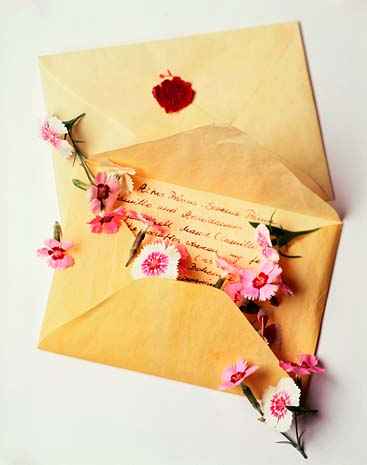
Love Letters

On receiving a love letter that has any particular declaration in it, lay it wide open; then fold it in nine folds, pin it next to your heart, and thus wear it till bedtime; then place it in your left hand glove, and lay it under your head.

If you dream of gold, diamonds, or any costly gems, your lover is true, and means what he says; if of white linen, you will lose him by death; and if of flowers, he will prove false. If you dream of his saluting you, he is at present false and means not what he professes, but only to draw you into a snare,

Found in:
Encyclopaedia of Superstitions, Folklore, and the Occult Sciences

Romany Valentine's Day Divination

By tradition many species of birds begin pairing off at this time. The Romanies say that if you are unattached, a bay leaf placed under your pillow on St. Valentine's Day will induce you to dream of the person you will marry.

From: The Good Spell Book

Love and Attraction Oil

  • Lemon Juice Extract or Essential Oil
  • Rosewater or Essential Oil
  • Vanilla bean extract or Essential Oil
  • Gold glitter or two gold stars
  • Almond oil
Prepare a perfumed oil using 2 ounces of almond oil as the base. Add 7 drops of rose water or 7 drops Rose Essential Oil, 3 drops of lemon extract, juice or essential Oil, One vanilla bean or 7 drops vanilla extract or essential oil, gold glitter or two gold stars

Anoint the pulse points before going out or add to bathwater for a magickal love attraction bath.

From: Incense Oils and Brews

Thursday, February 09, 2012

Sign of the Cedar

Birth Dates:
  • Feb 09 to Feb 18
  • Aug 14 to Aug 23
Key word: Confidence

The person born under the sign of the Cedar may possess a rare beauty. Other qualities include the following:  knows how to adapt, likes luxury, of good health, not in the least shy,  tends to look down on others, self-confident, determined, impatient, likes to impress others, many talents, industrious, healthy optimism, waiting for the one true love, able to make quick decisions.

SourceWicca Chat
ArtistMish Mash

Tuesday, February 07, 2012

Romany Folklore, Magicks, History, and More

If you are interested in the history of and folklore about the Romany people, if you are curious about their magick, beliefs, and etc, you are on the right page. Here we have a complete listing of posts on all of the above and more.

General Info

History
Language
Customs and Folklore

Romany Spells and Cures

Gypsy Food
Videos

Romany Holy Days, Feast Days, and etc

Gypsy Ways and Magic

I found this on a forum at SpellsOfMagic.com and thought it would be fun and appropriate to share:

Let me start off by saying my name is Tinka and I'm a gypsy born and raised. Shandi has asked me to give an overview of the ways of my people and going from there into our magic since it seems there are so many of you interested. I will do my best to explain it tho im not promising anything.


The Gypsy tradition goes back to the darkest reaches of time. It uses simple spells and rituals to harness the power of nature and of the elemental spirits that are all around us.


The Gypsy people are as independent in thought as they are in other areas of life, and they don't believe that a clergyman is really necessary to intercede between a person and the 'powers that be'. Although most Romanies would profess a belief in the official religion of the country in which they reside, and indeed many are now born-again Christians, there is still a deep respect for the old ways. And why not, when everyday experience proves the efficacy of those ways?


Everyone has the right and the ability to use the natural power of nature for themselves, though of course, as with everything else in life, some people are more talented than others. The more experienced a person is in the ways of the paranormal, the more confident and thus the more successful he will be come. The power should never be abused on trivialities, such as trying to impress others with your knowledge and ability, as this shows a complete lack of wisdom.


The Gypsy way is a way that springs from the heart, and the deepest, most primitive instincts of man. It respects nature and man's place in nature. It teaches us to take joy in the moment.

By: Tinka

Book of the Wisdom of the Egyptians


The Book of the Wisdom of the Egyptians - that's the title of this small story found in "Romano Lavo-Lil" by George Borrow. It's a wonderful collection of sayings, stories, anecdotes, and explanations. Enjoy!
  • The young people often ask: What good is there in the Romany tongue? I answers: Ye are all fools! There is plenty, plenty of good in it, and plenty, plenty of our people would have been transported or hung, but for the old, poor Roman language. A word in Romany said in time to a little girl, and carried to the camp, has caused a great purse of money and other things, which had been stolen, to be stowed underground; so that when the constables came they could find nothing, and had not only to let the Gypsy they had taken up go his way, but also to beg his pardon.
  • His term of transportation has now expired, and it were but right in him to come home, if it were only to take care of his poor old wife: she has been a true, true wife to him, and I don't believe that she has taken up with another man ever since he was sent across.
  • When one's pitched up one's little tent, made one's little fire before the door, and hung one's kettle by the kettle-iron over it, one doesn't like that an inspector or constable should come and say: What are you doing here? Take yourself off, you Gypsy dog.
  • On the first Friday of July, before the public-house called the Bald-faced Stag, on the hill above the town of the great tree in the Forest, you will see many Roman people, men and women, lads and lasses.
  • Do you know my old friend Mr. Stanniwix, the old gentleman that wears a pigtail, and made fourteen thousand pounds by smuggling?
  • He went on talking and talking foolishness till I said to him: If you goes on in that 'ere way I'll hit you a hot 'un on the nose.
  • You ask me what are patrins. Patrin is the name of the signs by which the Gypsies who go before show the road they have taken to those who follow behind. We flings handfuls of grass down at the head of the road we takes, or we makes with the finger a cross-mark on the ground, we sticks up branches of trees by the side the hedge. But the true patrin is handfuls of leaves flung down; for patrin or patten in old Roman language means the leaf of a tree.
  • The true way to be a wise man is to hear, see, and bear in mind.
  • The man who has not the whip-hand of his tongue and his temper is not fit to go into company.
  • The Bill to take up the no-man's lands (comons), and to make the poor people die of hunger and cold, has been flung out of the House of Commons.
  • The name they gives her is "Luck in a basket," because she carries about a basket, which every night, when she goes home, is sure to be full of stolen property.
  • This here, brothers, is the title of a book, the head-work of an old king of Roumany land: the Tribunal, or the dispute between the wise man and the world: or, the death-sentence passed by the soul upon the body.
  • When the rope was about his neck they brought him his pardon, and let him go; but from that day he would wear a neck-kerchief no more, for he said it brought to his mind the rope about his neck.
  • Jack Cooper could read enough to know all that was upon the milestones and the sign-posts.
  • Roman way to cook a fowl is to do it up with its feathers in clay, and then to put it in fire for a little more than half an hour. When the clay and the burnt feathers are taken from the fowl, the belly cut open, and the inside flung out, 'tis a food good enough for a queen to eat without salt.
  • When the Gentile way of living and the Gypsy way of living come together, it is anything but a good way of living.
  • He told me once that when he was a chap of twenty he killed a Gentile, and buried the dead meat under ground. He was taken up for the murder, but as no one could find the cold meat, the justices let him go. He said that the job did not sit heavy upon his mind for a long time, but then all of a sudden he became sad, and afraid of the dead Gentile's ghost; and that often of a night, as he was coming half-drunk from the public-house by himself, he would look over his right shoulder and over his left shoulder, to know if the dead man's ghost was not coming behind to lay hold of him.
  • Do you know the Gypsy way of taking the hand?
    Aye, aye, brother.
    Show it to me.
    They does it so, brother.
  • A tramp has more fun than a Gypsy.
  • You have heard the word pazorrus. That is what is called by the Gentiles "trusted," or in debt. In the old time the Roman who got from his brother money or other things on trust, and did not pay him again, could be made to work for him as horse, ass, or wood cutter for a year and a day. At present the matter is not so. If a Roman got money, or other things, from my hand on credit, and did not repay me, how could I make him labour for me as horse, ass, or stick-cutter for one day, not to say for a year?
  • Do you call this a fair? A very pretty fair is this: you might put it all into your pocket.
  • It is not a wise thing to say you have been wrong. If you allow you have been wrong, people will say: You may be a very honest fellow, but are certainly a very great fool.
  • Where are you living?
    Mine is not living; mine is staying, to say the best of it; I am a traveller, brother!
  • When Roman people speak to one another, they say brother and sister. When parents speak to their children, they say, my son, or my daughter, or my child, gorgiko-like, to either. When children speak to their parents, they say, my father, or my mother.
  • My father, why were worms made? My son, that moles might live by eating them. My father, why were moles made? My son, that you and I might live by catching them. My father, why were you and I made? My son, that worms might live by eating us.
  • All farmers are fools. When they hear a citizen in the country say: That's a fine horse! they say: 'Tis no horse, 'tis a mare; whether the thing's a horse or not. The simpletons don't know that a mare's a horse, though a horse is not a mare.
  • No one like Gypsy Will's wife for dancing in a platter.
  • When Constance Smith died, she was a hundred ten years old.
  • Do you know Mrs. Cooper?
    I knows her very well, brother.
    Do you like her?
    I loves her very much, brother; and I have often, often said to the other Gypsies, when they speaking ill of her: She's a gentlewoman; takes care of all of you; if it were not for her, you would all go to the devil.
    What does she do for a living?
    She tells fortunes, brother; she tells fortunes.
    Is she a good hand at fortune-telling?
    There's no Roman woman under the sun so good at fortune-telling as Mrs. Cooper; it is impossible not to have your fortune told by her; she's a true witch; she takes people by the hand, and tells their fortunes, whether they will or no.
  • 'Tis no use to go seeking after Gypsies. When you wants to see them 'tis impossible to find one of them; but when you are thinking of other matters you see plenty, plenty of them.
  • I will swear neither falsely nor truly against any one; if they wishes to find out something, let them find it out themselves.
  • If he had been transported for a great robbery, I would have said nothing; but it makes me mad to think that he has been sent away, all along of a vile harlot, for the value of three-and-sixpence.
  • When he had committed the murder he made haste, and ran into the wood, where he hid himself in the hollow of a great old tree; but it was no use at all; the runners followed his track all along the forest till they came to the tree.
  • How many fortunes have you told to-day?
    Only one lady's, brother; yonder she's coming back; I knows her by the black lace on her gown.
    How much money did she give you?
    Only one groat, brother; only one groat. May the devil run away with her bodily!
  • Hear the words of wisdom which Mike the Grecian said to Mrs. Trullifer: Mrs. Trollopr, you must live by your living; and if you have a pound you must spend it.
  • Can you speak Romany?
    Aye, aye, brother!
    What is
    Weshenjuggalslomomengreskeytemskeytudlogueri?
    I don't know what you say, brother.
    Then you are no master of Romany.

Gypsy Spell To Have An Object Returned

These are easy remedies that will help you to regain an object that someone has failed to return.

Pick a convenient time of day when you will be able to sit undisturbed for five minutes. Use the power of your will to bring the object back to you. If your will is strong, the thief will begin to feel uncomfortable, and will finally bring the missing item to you.

Another method is to place an iron nail on a window-sill. It should be pointed north, south, west, or east, in whichever direction the person who has the object lives. Simply will the object back every time you look at the nail. When the object has been returned the nail should be buried or restored to the tool kit it came from.

Another Romany remedy is to place a rose beside an object similar to the one that is missing. Love, symbolized by the rose, will prick someone's conscience and the object will be returned. Because you want the person's conscience to be pricked - be sure the rose is NOT a thornless variety.

From: The Good Spell Book
At Amazon: Iron Nail, Rose

To Discern the Thief Who Robbed You

Take the seed of sunflowers, which you must gather in the sign of the Lion in the month of August. Wrap the same up over a wolf's tooth; then take a bay leaf and wrap the tooth therein, then take the tooth, put it above your head, and you will see the thief.

From: Encyclopaedia of Superstitions, Folklore, and the Occult Sciences of the World
At Amazon: Sunflower Seeds, Wolf Tooth, Bay Leaves

What is Cauring?

Cauring is an old gypsy trick - here's how it works:

The Gypsy has some queer, old-fashioned gold piece; this she takes to some goldsmith's shop, at the window of which she has observed a basin full of old gold coins, and shows it to the goldsmith, asking him if he will purchase it. He looks at it attentively, and sees that it is of very pure gold; whereupon he says that he has no particular objection to buy it; but that as it is very old it is not of much value, and that he has several like it.

"Have you indeed, Master?" says the Gypsy; "then pray show them to me, and I will buy them; for, to tell you the truth, I would rather buy than sell pieces like this, for I have a great respect for them, and know their value: give me back my coin, and I will compare any you have with it."

The goldsmith gives her back her coin, takes his basin of gold from the window, and places it on the counter. The Gypsy puts down her head, and pries into the basin. "Ah, I see nothing here like my coin," says she. "Now, Master, to oblige me, take out a handful of the coins and lay them on the counter; I am a poor, honest woman, Master, and do not wish to put my hand into your basin. Oh! if I could find one coin like my own, I would give much money for it; barributer than it is worth."

The goldsmith, to oblige the poor, simple, foreign creature (for such he believes her to be), and, with a considerable hope of profit, takes a handful of coins from the basin and puts them upon the counter.

"I fear there is none here like mine, Master," says the Gypsy, moving the coins rapidly with the tips of her fingers. "No, no, there is not one here like mine - kek yeck, kek yeck - notone, not one. Stay, stay! What's this, what's this? So se cavo, so se cavo? Oh, here is one like mine; or if not quite like, like enough to suit me. Now, Master, what will you take for this coin?"

The goldsmith looks at it, and names a price considerably above the value; whereupon she says: "Now, Master, I will deal fairly with you: you have not asked me the full value of the coin by three three-groats, three-groats, three-groats; by trin tringurushis, tringurushis, tringurushis. So here's the money you asked, Master, and three three-groats, three shillings, besides. God bless you, Master! You would have cheated yourself, but the poor woman would not let you; for though she is poor she is honest": and thus she takes her leave, leaving the goldsmith very well satisfied with his customer - with little reason, however, for out of about twenty coins which he laid on the counter she had filched at least three, which her brown nimble fingers, though they seemingly scarcely touched the gold, contrived to convey up her sleeves.

This kind of pilfering is called by the English Gypsies cauring, and by the Spanish ustilar pastesas, or stealing with the fingers. The word caur seems to be connected with the English cower, and the Hebrew kãra, a word of frequent occurrence in the historical part of the Old Testament, and signifying to bend, stoop down, incurvare.

From: Romano Lavo-Lil

What is The Hukni?

The hukni is an old Gypsy trick - here's how it works:

The Gypsy makes some poor simpleton of a lady believe that if the latter puts her gold into her hands, and she makes it up into a parcel, and puts it between the lady's feather-bed and mattress, it will at the end of a month be multiplied a hundredfold, provided the lady does not look at it during all that time. On receiving the money she makes it up into a brown paper parcel, which she seals with wax, turns herself repeatedly round, squints, and spits, and then puts between the feather-bed and mattress - not the parcel of gold, but one exactly like it, which she has prepared beforehand, containing old halfpence, farthings, and the like; then, after cautioning the lady by no means to undo the parcel before the stated time, she takes her departure singing to herself:

O dear me! O dear me!
What dinnelies these gorgies be.

The above artifice is called by the English Gypsies the hukni, and by the Spanish hokhano baro, or the great lie. Hukni and hokano were originally one and the same word; the root seems to be the Sanscrit huhanã, lie, trick, deceit.

From: Romano Lavo-Lil

Gypsy Fortune Telling

Gypsy women, as long as we have known anything of Gypsy history, have been arrant fortune-tellers. They plied fortune-telling about France and Germany as early as 1414, the year when the dusky bands were first observed in Europe, and they have never relinquished the practice. There are two words for fortune-telling in Gypsy, bocht and dukkering. Bocht is a Persian word, a modification of, or connected with, the Sanscrit bagya, which signifies 'fate.' Dukkering is the modification of a Wallaco-Sclavonian word signifying something spiritual or ghostly. In Eastern European Gypsy, the Holy Ghost is called Swentuno Ducos.

Gypsy fortune-telling is much the same everywhere, much the same in Russia as it is in Spain and in England. Everywhere there are three styles - the lofty, the familiar, and the homely; and every Gypsy woman is mistress of all three and uses each according to the rank of the person whose vast she dukkers, whose hand she reads, and adapts the luck she promises. There is a ballad of some antiquity in the Spanish language about the Buena Ventura, a few stanzas of which translated will convey a tolerable idea of the first of these styles to the reader, who will probably with no great reluctance dispense with any illustrations of the other two:-

Late rather one morning
In summer's sweet tide,
Goes forth to the Prado
Jacinta the bride:

There meets her a Gypsy
So fluent of talk,
And jauntily dressed,
On the principal walk.

"O welcome, thrice welcome,
Of beauty thou flower!
Believe me, believe me,
Thou com'st in good hour."

Surprised was Jacinta;
She fain would have fled;
But the Gypsy to cheer her

"O cheek like the rose-leaf!
O lady high-born!
Turn thine eyes on thy servant,
But ah, not in scorn.

"O pride of the Prado!
O joy of our clime!
Thou twice shalt be married,
And happily each time.

"Of two noble sons Thou shalt be the glad mother,
One a Lord Judge,
A Field-Marshal the other."

Gypsy females have told fortunes to higher people than the young Countess Jacinta: Modor - of the Gypsy quire of Moscow - told the fortune of Ekatarina, Empress of all the Russias. The writer does not know what the Ziganka told that exalted personage, but it appears that she gave perfect satisfaction to the Empress, who not only presented her with a diamond ring - a Russian diamond ring is not generally of much value - but also her hand to kiss.

The writer's old friend, Pepíta, the Gitana of Madrid, told the bahi of Christina, the Regentess of Spain, in which she assured her that she would marry the son of the King of France, and received from the fair Italian a golden ounce, the most magnificent of coins, a guerdon which she richly merited, for she nearly hit the mark, for though Christina did not marry the son of the King of France, her second daughter was married to a son of the King of France, the Duke of M-, one of the three claimants of the crown of Spain, and the best of the lot; and Britannia, the Caumli, told the good luck to the Regent George on Newmarket Heath, and received 'foive guineas' and a hearty smack from him who eventually became George the Fourth - no bad fellow by the by, either as regent or king, though as much abused as Pontius Pilate, whom he much resembled in one point, unwillingness to take life - the sonkaypè or gold-gift being, no doubt, more acceptable than the choomapé or kiss-gift to the Beltenebrosa, who, if a certain song be true, had no respect for gorgios, however much she liked their money:

Britannia is my nav;
I am a Kaulo Camlo;
The gorgios pen I be
A bori chovahaunie;
And tatchipen they pens,
The dinneleskie gorgies,
For mande chovahans
The luvvu from their putsies.
Britannia is my name;
I am a swarthy Lovel;
The Gorgios say I be
A witch of wondrous power;
And faith they speak the truth,
The silly, foolish fellows,
For often I bewitch
The money from their pockets.

Fortune-telling in all countries where the Gypsies are found is frequently the prelude to a kind of trick called in all Gypsy dialects by something more or less resembling the Sanscrit kuhana; for instance, it is called in Spain jojana, hokano, and in English hukni. It is practised in various ways, all very similar; the defrauding of some simple person of money or property being the object in view. Females are generally the victims of the trick, especially those of the middle class, who are more accessible to the poor woman than those of the upper. One of the ways, perhaps the most artful, will be found described in another chapter (What is The Hukni? and What is Cauring?)

From: Romano Lavo-Lil

Monday, February 06, 2012

Why Magick?

The ability to think seems to set us apart from other creatures. And although we are concerned with living in the physical world, we are mental beings. The fact is we are thinking all the time. We plan, we brood, we get depressed or elated -- all of it is thought. But the universe is mental too, and if we could control our thinking we would see magnificent results in the everyday world.

Many systems have been developed over the ages to help us control our thoughts. A great amount of dogma too has been kicked around in an attempt to make us into better people. Magick (the occult kind, spelled with a 'k') is one of the oldest and most general of these systems. Magick is the study and application of psychic forces. It uses mental training, concentration, and a system of symbols to program the mind. The purpose of magick is to alter the self and the environment according to the will.

Most of the magick we see today comes to us from ancient Egypt and Chaldea. The Chinese, Hindus, and Tibetans developed their own unique types of magick. Western magick was locked up by the Egyptian priests for thousands of years and then supressed by the rise of Christianity. It was not until medieval Europe that magical knowledge was rediscovered by the alchemists and Cabalists. Only during the past hundred years or so has western culture been open minded enough to permit widespread investigation of the subject. Only since the start of the twentieth century has science shown much interest in it at all.

WHY DO MAGICK?

Magick encompasses many things - science and art, philosophy and metaphysics, psychology and comparative religion. Magick is an adventure at the borderlands of the unknown. It can fit the pieces of the puzzle of life into a meaningful whole.

Magick is fun and interesting. Use magick to help raise consciousness without drugs. Gain new experiences. Fantasy can come alive through magick. Psychic phenomena can be controlled and be fun and helpful.

Magick is beneficial. It can help you to have excellent health, and bring you good luck. With magick, life runs smoothly; life is good. Magick can also be used for personality improvement, to control bad habits and to develop new motivations.

Magick is powerful. Never underestimate the tremendous power of magick. Use magick to alter events and to achieve your goals. Exert an influence over people and phenomena. But remember, power for its own sake is self defeating. The power which magick can give you should not be your primary reason for studying it.

Author: Phil Hansford

On Practical Magick

To some people, the idea that "Magick" is practical comes as a surprise.

It shouldn't. The entire basis for Magick is to exercise influence over one's environment. while Magick is also, and properly so, concerned with spiritual growth and psychological transformation, even the spiritual life must rest firmly on material foundations.

The material world and the psychic are intertwined, and it is this very fact that establishes the magickal Link: that the psychic can as easily influence the material as vice versa.

Magick can, and should, be used in one's daily life for better living! Each of us has been given Mind and Body, and surely we are under Spiritual obligation to make full usage of these wonderful gifts. Mind and Body work together, and Magick is simply the extension of this interaction into dimensions beyond the limits normally conceived. That's why we commonly talk of the "super-normal" in connection with domain of Magick.

The body is alive, and all Life is an expression of the Divine. There is God-power in the Body and in the Earth, just as there is in Mind and Spirit. With Love and Will, we use Mind to link these aspects of Divinity together to bring about change.

With Magick we increase the flow of Divinity in our lives and in the world around us. We add to the beauty of it all - for to work Magick we must work in harmony with the Laws of Nature and of the Psyche. Magick is the flowering of the Human Potential.

Practical Magick is concerned with the Craft of Living well and in harmony with Nature, and with the Magick of the Earth, in the things of the Earth, in the seasons and cycles and in the things we make with hand and Mind.

Found in: Wicca: A Guide for the Solitary Practitioner

Saturday, February 04, 2012

Sign of the Poplar

Birth Dates:

  • Feb 04 to Feb 08
  • May 01 to May 14
  • Aug 05 to Aug 13
Key word: Uncertainty.

Persons born under the sign of the Poplar tree tend towards the following qualities:  looks very decorative, not very self-confident, only courageous if necessary, needs goodwill and pleasant surroundings, very choosy, often lonely, may harbor great animosity, artistic nature, good organizer, tends to lean toward philosophy, reliable in any situation, takes partnership seriously.

Source: Wicca Chat
Art by: Paul Sandilands
               

Wednesday, February 01, 2012

Brigid's Blackberry Pie

  • 4 cups fresh blackberries (thawed frozen is okay)
  • 1-1/2 cups sugar
  • 1/3 cup flour
  • 1/4 teaspoon cinnamon
  • 1/8 teaspoon salt
  • Unbaked pie crust
Preheat oven to 325 degrees F. Line a deep pie dish with the pie crust, or purchase a commercially-made one. Set aside. Mix all other ingredients together in a large mixing bowl. If it appears too "wet", mix in a little more flour (about 2 tablespoons). Turn the fruit into the pie shell and dot with butter or margarine. You can bake the pie as is, or cover it with another pie crust. If you do this, pinch down the ends to hold it to the other crust. Then score the top several times with a sharp knife. Bake for 1 hour, or until the top crust is a golden brown. Makes one nine-inch pie.

From: Sabbats

February Birth Flower

The February birth flower is the iris. The warm, deep color of the iris is a harbringer of the luxuries of spring, as we know February has long been a month known for romance and love. The iris comes a few colors including cool blue and snowy white, remembrances of winter. The iris flower meaning are faith, wisdom, and hope. The iris is a beautiful and meaningful gift. An alternate February birth flower is the violet.

There are hundreds of species of the February birth flower, the iris. The iris is a perennial herb. An iris can be grown from a creeping rhizomes or a bulb. The bulb is usually used in drier climates. The iris has been valued since ancient times. There is a flower on the sphinx in Egypt believed to be an iris. Another iris appears on a bas-relief from the 28th Egyptian Dynasty. In ancient times iris roots were used in perfume and medicine. The fleur-de-lis is a stylized iris, which was used much in heraldry. The February birth flower, iris, is Greek for "rainbow".

Source: Birth Flowers Guide

Violet Magick

Ruler: Venus
Type: Flower
Magickal Form: Flowers, essential oil

One of the customs surrounding fresh violets is that they must be stolen or they won't grow. Wild violets increase happiness. Potted violets prevent accidents and soothe the nerves. The fragrance of violets brings enormous comfort and is used in love and healing spells.

Violets are often assigned as the flower of the month of February.

From: The Encyclopedia of Magickal Ingredients

Iris's Day

Colors: All the spectrum of the rainbow.
Element: Air
Altar: Upon a cloth of rainbows set a vase of irises, several flags of rainbow colors, and colored pinwheels.
Offerings: Sing into the wind.
Daily Meal: Brightly colored vegetarian food.


Invocation to Iris

Hail the Many-Colored Messenger!
Hail the Maiden that follows the rain!
Hail the goddess on bright wings
Whose appearance is hope in the future.
All hail lightness of heart
And a smile flung into the oncoming wind.
Winged one,
Rainbow's child,
Spreading your colors
Across the sky,
Bring us hope
Bring us joy
Carry our wishes
Far onto the winds.
Winged one,
Smile upon us
With your many-colored eyes.

(Each takes up a flag or a pinwheel, and a procession is formed to the outside of the house, in the yard or garden. As each hangs their flag or plants their pinwheel, they say to the sky, "Hear me, Iris; I sing my message to you. Take it where it needs to go." Then they sing a series of notes, or a short song, which contains the message they would like to go to the Powers That Be. Then one member who has the skill should play a tune on pipes or flute, and all should join hands and dance in a circle to honor the Rainbow Maiden. For the rest of the day until evening at least, all should dress in brightly colored clothing, if possible.)

From Pagan Book of Hours

Cats and Magick

If you are interested in cats, cat magicks, cat lore, spells and omens specific to cats, this is the jumping off point. This page offers a complete listing of everything posted to date about cats here at Gypsy Magick.

Omens and Other Lore
Healing and Herbs
Cat Magicks
Associated Dieties

Blog Widget by LinkWithin

Ask Auntie Moss

Auntie Moss

Ask any yes or no question, and Auntie Moss be givin' you an answer. This old witch woman is wiser than you think. Go ahead, give it a go.
Your question:
Auntie Moss says:

Fellow Travelers

Google+ Followers

"Magical Template" designed by Blogger Buster